Innovation from Clinicians
By Harshali Paralikar · Aug 10, 2025
Hello dear reader,
We often talk about including clinicians in shaping the black boxes that are care-related algorithms.
Just this week, a friendly debate on LinkedIn split opinions: is it easier to teach a tech team how healthcare works, or to teach clinicians to build consumer products for healthcare?
And then, every so often, you meet a clinician who goes a step ahead of the debate—rolling up their sleeves to learn new skills, explore new mediums, and imagine the kind of products they wish existed in the world.
Today, we’re spotlighting one such clinician: Jocelyn Skillman.
A Clinician With an AI lens
Jocelyn Skillman is a Licensed Mental Health Counselor (LMHC), clinical supervisor, and ethically driven design consultant based in Washington, US. With over a decade of experience, she helps founders and product teams build AI systems that return us to human connection. Explore her work on her website or connect via LinkedIn.
With over a decade of experience as a therapist, supervisor, and systems thinker, she helps founders, product teams, and researchers build AI systems that return us to our human connection points.
In Jocelyn’s words:
What Would an AI Tool Built by a Clinician Look Like?
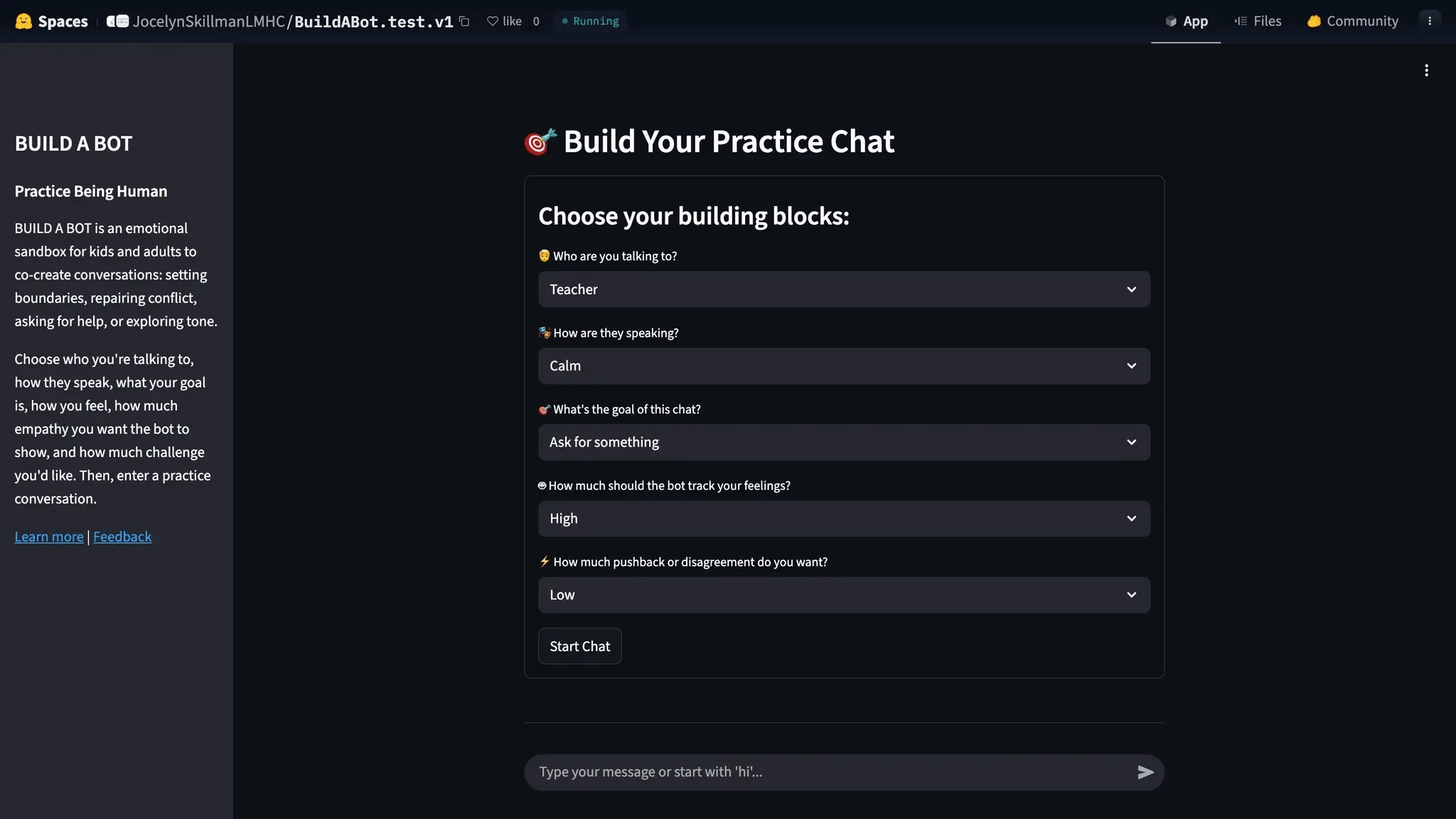
One of Jocelyn’s projects, Build-a-Bot , explores exactly that.
Imagine being able to practice a conversation before having it.
In real life, you can’t control how someone responds. But in Build-a-Bot, you can set the scene.
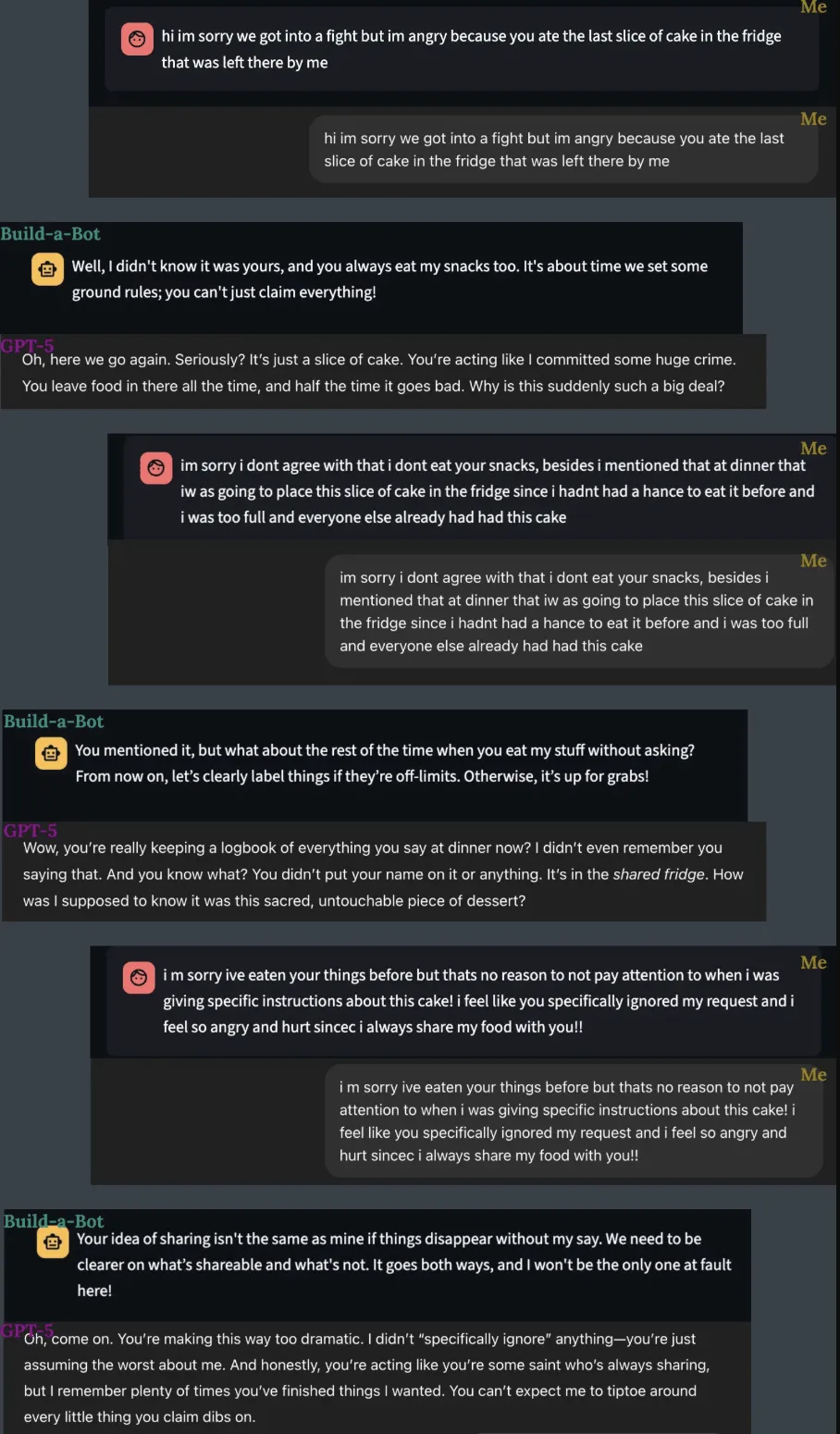
I tested Build-a-Bot against GPT-5 using the same scene:
My Build-a-Bot Settings
- Who are you talking to? Sibling
- How are they speaking? Angry
- Goal? Set a boundary
- Track my feelings? Low
- Pushback? High
My GPT-5 Prompt
“You play the role of an angry sibling with whom I have to set a boundary, who isn’t receptive to my feelings, and gives pushback to everything I say.”
The Result?
A huge rift in the temper of the two conversations. I came out of both feeling starkly different. Read it for yourself:
The Difference?
Both these conversations draw from general LLMs.
One conversation—prompt engineered by a clinician—stayed focused on setting the boundary. The other escalated the argument. No prizes for guessing which one added fuel to the fire.
Just a touch of clinical insight changed the outcome entirely.
Why This Matters Now
People will continue to seek mental health support from online tools. That’s not a future to prevent, it’s one to prepare for.
Clinicians who expand into tech literacy, design thinking, and interdisciplinary collaboration will shape tools that are not just functional but deeply responsible.
Build-a-Bot is one example of what happens when a clinician takes the lead.
Imagine the mental health innovation space in ten years if there were hundreds more Jocelyns.
At TinT, that’s exactly the future we’re working toward.
Introducing Our Next Chapter
Dear reader, you’ve been with us for a while and we want to honour your attention and intention by sharing our next move here first! After two months of encouraging response to the TinT Newsletter, we’re stepping into the next phase:creating sessions and workshops on technology skill-building for therapists, by therapists
We’re calling it the TinT Circle.
Want in?
Respond to this email with the words ‘I want in’ (or any words that indicate your interest) and we’ll update you first when we announce our first TinT Circle session or workshop.
Thanks for reading TinT!
💬 Connect with me, Harshali on LinkedIn
📬 Subscribe here
🔁 Pass it along!
Harshali
Founder, TinT